


Previously in America 251. So far in this series, we’ve explored what helps people feel rooted in their communities and connected to the people around them. People need relationships, but they also need the time, energy, and stability to invest in them. That raises a larger question: once people have roots and relationships, do they have the time, space, and opportunity to enjoy their lives? This week, we explore joy and meaning.
Much of modern American life feels organized around survival: paying bills, keeping up, staying productive, managing stress. For many people, finding joy has become something squeezed into whatever time remains after work, caregiving, financial pressure, and exhaustion.
Despite how difficult it is to prioritize, joy matters. A flourishing society depends on more than economic growth or political participation. It depends on whether people have the ability to experience meaning, connection, creativity, rest, and pleasure in their everyday lives. Whether they have something to look forward to. Whether they feel their lives are aligned with what matters most to them.
When we asked Americans about joy, we found something both encouraging and revealing. Most people feel like they know what makes a good life. The issue is whether they have enough room in their lives to experience it.
If Time Were Ours
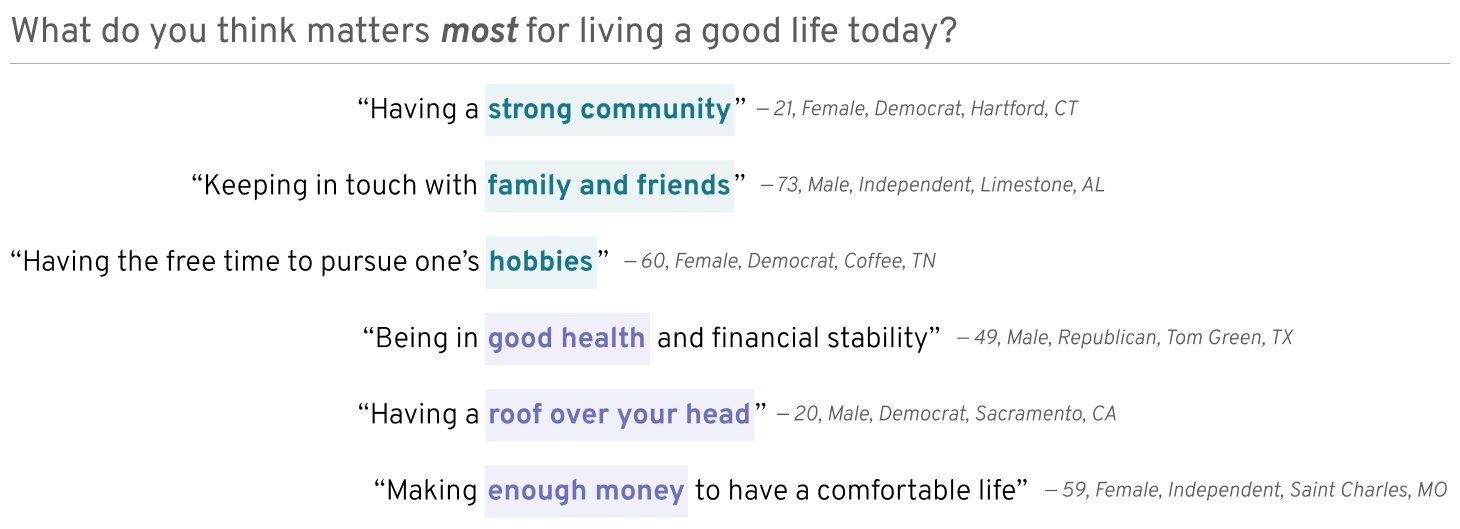
The first thing that stands out in the data is that Americans are not nearly as unhappy as public discourse often suggests. A majority describe themselves as very or mostly happy (57%). Most have at least a few close friends or family members who bring them joy (91%). Nearly six in ten say they are often or always able to be fully present and enjoy positive moments when they happen (59%). And almost nine in ten have something to look forward to at least sometimes, with nearly one in five saying they always do.
What appears to matter most, however, is not simply whether people are doing enjoyable things. It is whether they have something to look forward to. Among Americans who describe themselves as very happy, 85% say they always or often have something to look forward to. By comparison, 76% say they do something for enjoyment daily or a few times a week. Overall, 57% of Americans report making time for enjoyable activities at least a few times a week. But for many Americans, that time is constrained. Half say finances often or always prevent them from doing things they enjoy (50%). Four in ten say stress and responsibilities often or always get in the way (40%).
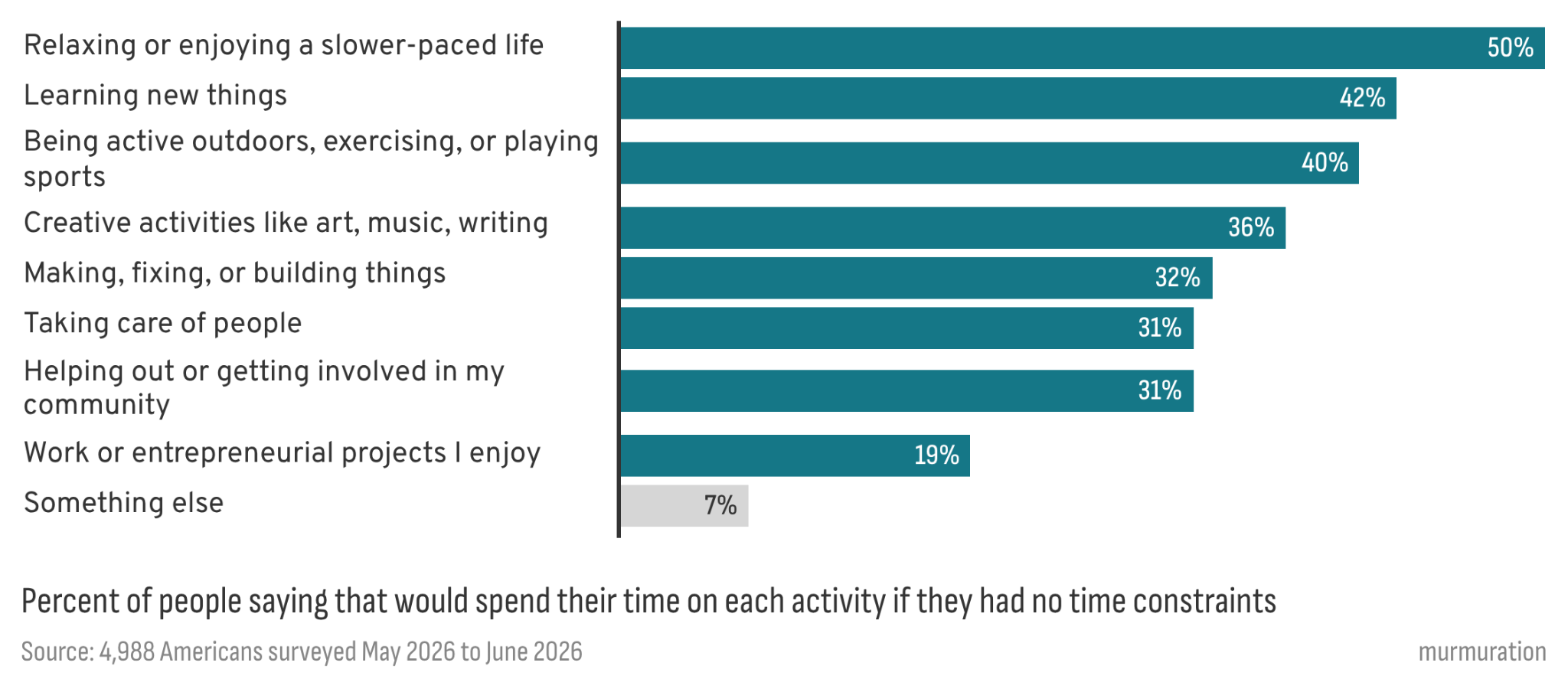
When we ask Americans how they would spend their time if money and responsibilities were not constraints, their answers tell us a great deal about what people believe is missing from modern life. Half say they would choose a slower-paced life (50%). More than four in ten would spend more time learning new things (42%). Similar shares would spend more time outdoors (40%). Others would devote more time to creative pursuits (36%), building or making things (32%), caring for loved ones (31%), or helping in their communities (31%). Only a relatively small share says they would spend more time working or pursuing entrepreneurial projects (19%).
And what may be one of the most hopeful findings in the data: Most Americans say they find joy in close relationships, hobbies, personal interests, and time spent with family and friends. Many are actively learning something new. Nearly three-quarters report making, fixing, growing, or building something they were proud of in the past year (72%).
Between Living and Thriving
While most Americans report being generally happy, far fewer say their lives are completely aligned with their values, priorities, and sense of purpose. Only a small share describe their lives as fully aligned (7%), while many more say they are only somewhat aligned (51%). Those who say they are “very happy” lately are the only ones who feel that their life is either completely or very aligned with what matters most to them (71%). Even among Americans who are “mostly happy”, just 41% say their lives are completely or very aligned.
Moreover, people can be happy and still feel constrained. They can have moments of joy while sensing that the life they are living is not quite the life they would choose. And, just as we found in our recent analysis on belonging and connection, financial comfort plays an important role.
Americans who are financially comfortable are significantly more likely to report happiness, a sense of alignment, things to look forward to, and the ability to be present and enjoy life’s positive moments. They are more likely to pursue hobbies, spend time learning, engage in creative activities, and feel that their lives reflect what matters most to them.
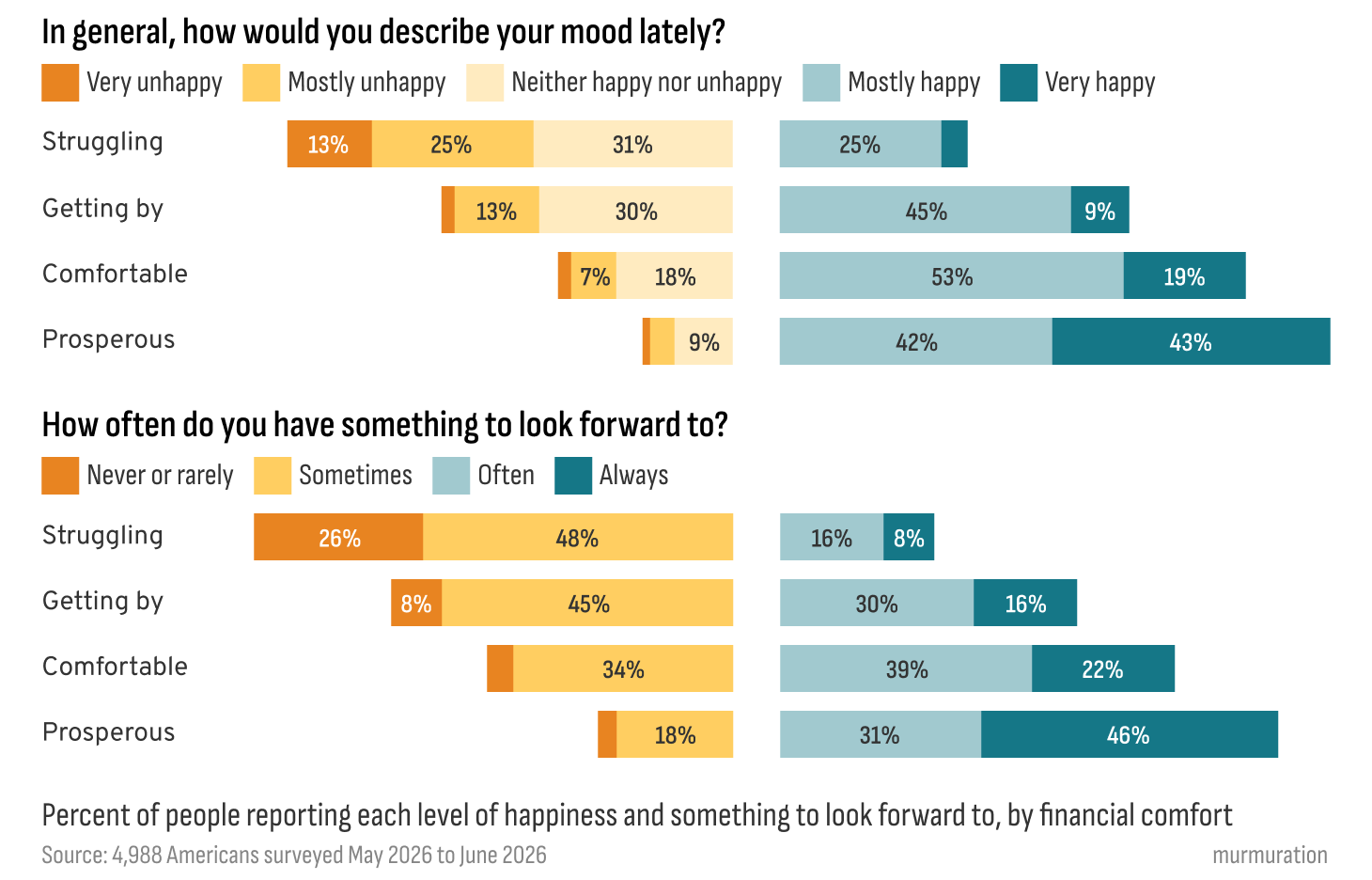
Those who are struggling financially report a very different experience. They are substantially more likely to say finances prevent them from doing things they enjoy. They are less likely to have something to look forward to, less likely to feel aligned with their priorities, and less likely to experience the everyday conditions that support joy. Notably, financial constraints appear to weigh more heavily on happiness than stress or responsibilities alone. Among Americans who say they have been very unhappy lately, 62% report that money is always preventing them from doing things they enjoy, compared with 49% who say the same about stress and responsibilities.
Three posts into this series, the pattern is becoming difficult to ignore. Financial comfort is shaping more than material well-being. It appears to dramatically influence whether people have the freedom to pursue the relationships, activities, and experiences that make life feel meaningful.
Final Thoughts
Much of the American story is built around the pursuit of happiness. Yet these findings suggest that what people are seeking may be something slightly different.
What many Americans appear to want is the ability to spend more of their lives doing the things that matter to them. To learn. To create. To care for others. To contribute. To spend time with people they love. To feel that their daily lives reflect their values and priorities.
The findings leave us with fundamental questions about what it means to flourish in modern America:
If Americans know what brings them joy, what keeps them from pursuing it?
What would change if more people had the time, stability, and resources to live in closer alignment with what matters most?
And what kind of society are we building if joy becomes something reserved for the moments left over after everything else is done?
Belonging, connection, and joy are often treated as personal choices or personality traits. But the data increasingly suggest they are also shaped by material conditions. People need more than good intentions to thrive. They need enough stability to put down roots, enough connection to feel supported, and enough time and opportunity to fully participate in their own lives.
A good life should feel good, too.
As America marks its 250th anniversary, this State of Us series looks beyond nostalgia and national myth toward the future we still have the chance to build—one grounded in belonging, connection, dignity, and the everyday realities of American life.
Murmuration is a non-profit that organizes a network of partners and equips them with the insights, tools, and services needed to help communities build and activate the power to transform America into a nation where everyone thrives. murmuration.org