


Food insecurity is one of those phrases that can sound abstract until it is not. More than hunger in the most extreme sense, it is also about the quieter, more constant stress and uncertainty of whether people can access the food they need to live a full life.
This month, Murmuration partnered with the Iowa Food Bank Association to better understand how people are experiencing food insecurity, in Iowa, neighboring states, and nationwide. Iowa is often seen as a symbol of agricultural abundance, a place that helps feed the country. But even in a state defined by food production, many households are feeling the strain of rising costs and shrinking support networks.
It is challenging and expensive. Each week I watch how much items I generally purchase increase. It’s shamefully confusing to understand what is driving the price increases. - Female, 74, Black Hawk, Iowa
Food insecurity is an everyday pressure shaping how people across the country think about their lives, community responsibility, and what government is for.
Reshaping Household Life
The rising cost of food is reshaping how Americans manage their households.
“I usually go without eating to make sure my child has everything I can do for her. This past year has been the most stressful and hardest year I’ve had.” – 36, Female, Democrat, San Bernardino, CA
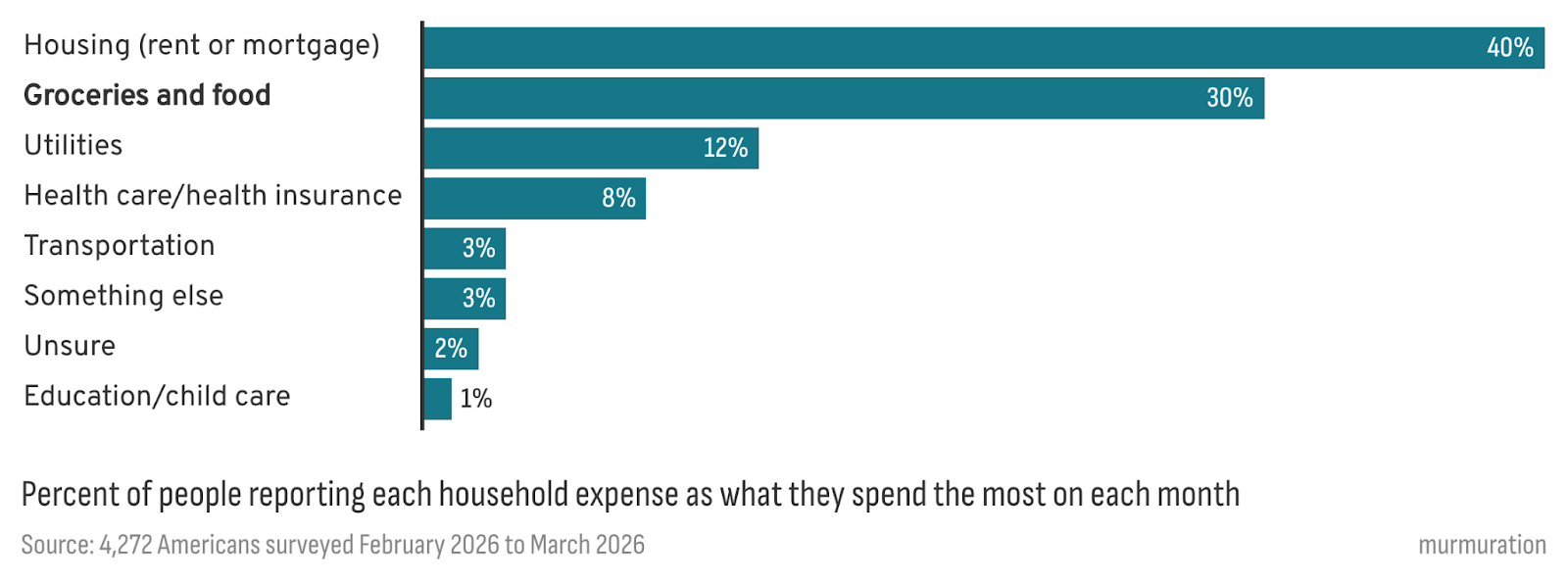
Across the country, groceries are now one of the largest monthly expenses families face. Thirty percent of Americans say food is the single biggest cost in their household budget each month, second only to housing (40%).
That pressure is visible in how people shop. Nearly seven in ten Americans (69%) say they are dissatisfied with the price they pay for food and groceries, while only 12% say they are satisfied. But dissatisfaction alone doesn’t capture the scale of adjustment households are making. Rising food prices are forcing people to change both what they buy and how they spend elsewhere.
More than three-quarters of Americans say they have had to adjust their grocery purchases due to rising costs. Thirty-two percent report making major changes to the types or amounts of food they buy, while another 45% say they have made smaller changes. Only 21% say they have not had to adjust at all.
“It’s expensive and I don’t get to buy healthy food due to high prices and I don’t have enough to complete meals for the month. I have to skip several meals a week to survive.” – 45, Female, Republican, Tarrant, TX
“[We are] constantly changing where we buy certain items trying to take advantage of local specials and sales.” – 75, Male, Independent, Racine, WI
Those adjustments ripple outward. Sixty-nine percent of Americans say rising food costs have forced them to change spending in other areas of their lives, including childcare, transportation, and entertainment.
For most households, this isn’t about luxury items. It’s about constant calculation.
“Grocery shopping was one of my favorite things, now it leaves me with a feeling of dread and anxiety. I’m thankful we are able to still afford food but we can barely afford anything else. Food, rent, and utilities are killing us.” – 37, Female, Independent, Maricopa, AZ
Only one in four Americans (25%) say they can buy whatever food they want without thinking much about the cost. Most people (61%) say they can afford enough food but must be careful about what they spend. And 12% say they often do not have enough money to buy the food they need.
“We always buy loss leaders or discounted and past-dated foods when possible.” – 85, Male, Democrat, Grafton, NH
In other words, food insecurity doesn’t always show up as empty refrigerators. Often, it shows up as vigilance: reading prices carefully, switching brands, skipping certain items, or cutting back elsewhere just to keep groceries on the table.
Rising Food Insecurity
For many Americans, food insecurity is no longer something they associate with distant communities or rare hardship. It is something they recognize around them. Seventy-two percent of Americans say food insecurity is a problem in their state, including 43% who describe it as a big problem. Sixty-two percent say it is a problem in their own community, with 32% calling it a big problem locally.
These perceptions are grounded in real experiences. Over half of Americans in our survey say they have received government assistance at some point in their lives—including programs like SNAP—and many also engage with the food system through community support such as food banks.
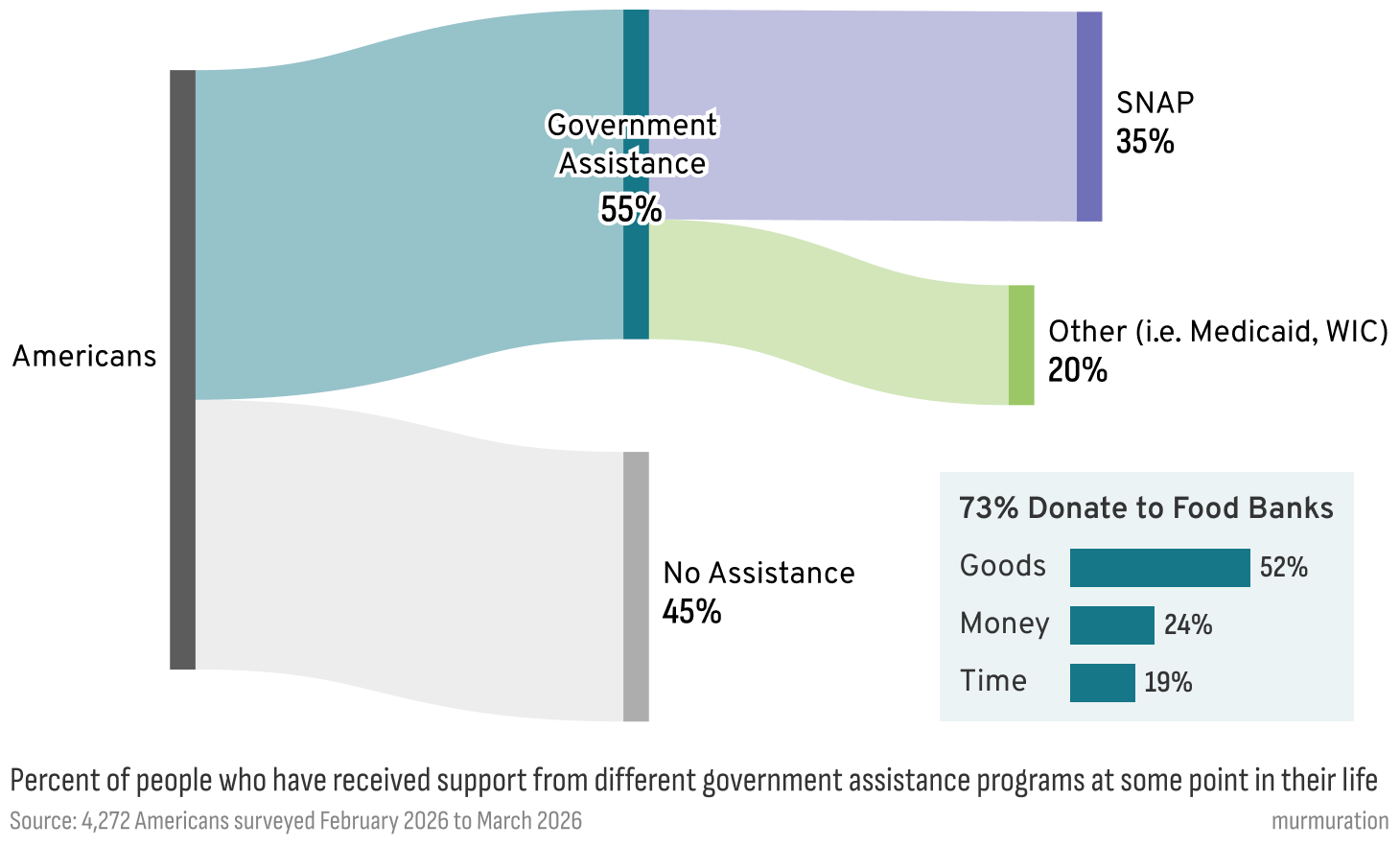
This dual reality—people both receiving and giving help—reveals how embedded food insecurity has become in everyday civic life; woven into the social fabric of communities across the country.
Support for Solutions
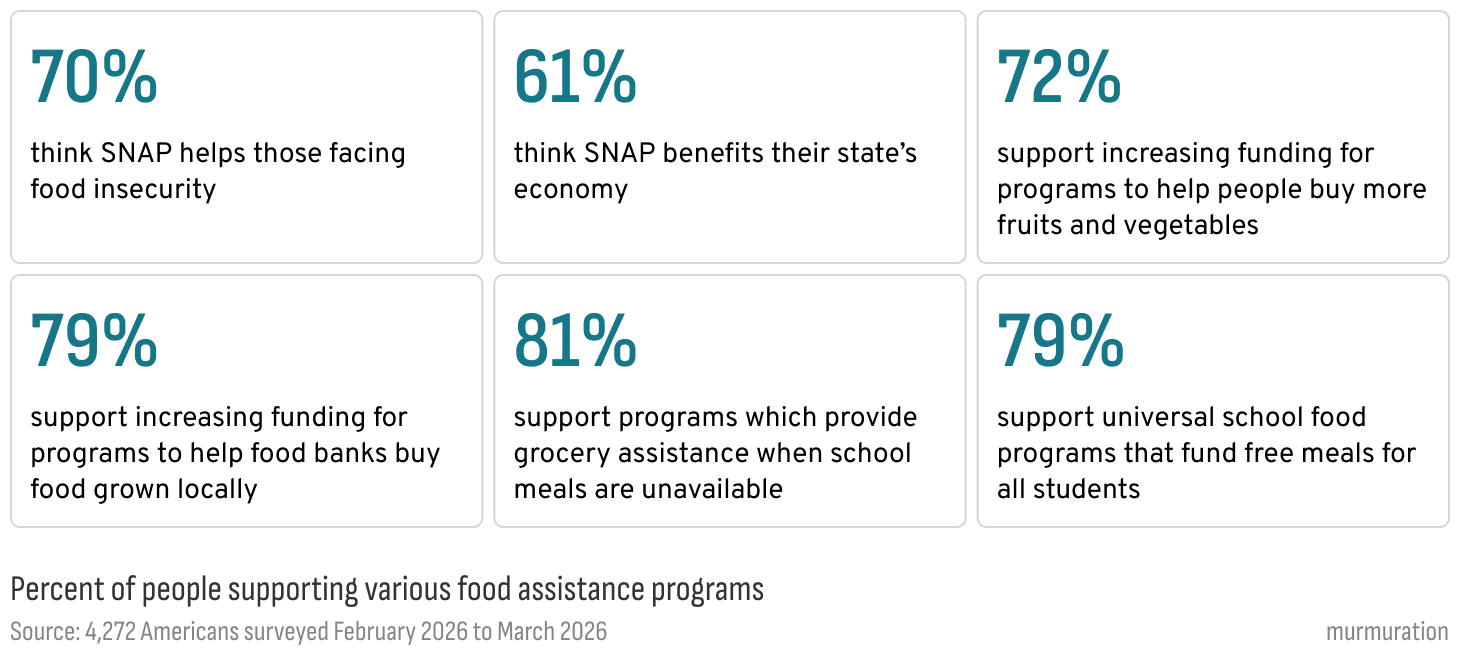
Despite the complexity of the issue, one thing stands out clearly in the data: Americans broadly agree that food insecurity is a problem worth solving, and they support practical ways to address it. Across programs and across contexts, there is consensus that food assistance should exist and that it plays an important role in supporting families and communities.
At the same time, people remain uncertain about how well the systems delivering that help are working. Only 38% believe food assistance programs in their state are well run with low levels of waste or fraud, while 42% disagree and 21% say they are unsure. That gap points to a deeper tension in public opinion. Americans may support the purpose of these programs, but many remain skeptical about whether the systems behind them operate as effectively or fairly as they should.
In other words, the public is not just thinking about whether help exists—they are thinking about whether the institutions responsible for delivering it can be trusted to work.
Final Thoughts
These findings are a window into a broader American condition: rising costs, widening strain, and a growing sense that basic needs are becoming harder to guarantee.
Food insecurity is bigger than just food. It is about dignity. It is about stability. It is about whether communities can thrive when families cannot reliably meet the most fundamental need of all.
It is also about civic trust. When people see neighbors struggling, they form judgments about whether institutions are responsive. When they rely on food banks or federal programs, they develop lived opinions about how well those systems work. These experiences shape how people think about government—not in theory, but in practice.
The data leaves us with harder questions about how Americans are experiencing daily life and the systems meant to help them:
How do everyday encounters with food banks, grocery prices, and assistance programs shape whether people believe the system works for families like theirs?
If the public already recognizes food insecurity as a real and widespread problem—and strongly supports practical solutions—what is standing between that and meaningful action?
And perhaps most fundamentally: when something as basic as access to food becomes uncertain, what does that do to people’s sense of security, belonging, and trust in the institutions meant to serve them?
Our data reflects a national reality: widespread dissatisfaction with food prices, broad recognition of the implications for health, hunger, and finances, and strong support for practical—and already established—solutions. Right now, the public’s clarity outpaces the political response.
Food is foundational. So is action.
Murmuration is a non-profit that organizes a network of partners and equips them with the insights, tools, and services needed to help communities build and activate the power to transform America into a nation where everyone thrives. murmuration.org.