


Last week, Americans went to the polls and changed the political landscape. Democrats won control of the Senate and the House, voters reshaped leadership across states and communities, and women made history in races across the country. The results were a powerful reminder of what elections make possible when people exercise their voice.
A week later, as attention turns from election results to what comes next, an important question remains: How do we translate the power people exercised at the ballot box into meaningful, lasting improvements in their lives and communities?
Below, we’re sharing five things we’ve learned this year about what Americans want and what it might take to deliver on those aspirations.
The Work Ahead
1. Economic security remains a priority.
What we’re seeing: Throughout the year, financial security emerged as one of the clearest divides in Americans’ everyday experiences, shaping both their priorities and what they need from the government.

What Americans want: Among Americans who are struggling financially, 71% prioritize lowering the cost of living, compared with just 33% of those who are prosperous. While a majority of Americans (55%) favor long-term changes that address the root causes of economic problems, those who are struggling are more likely to prioritize immediate financial relief (51%) than long-term change (41%). When asked what Congress should do to make expenses more affordable, 41% prioritized limiting excessive price increases by companies, 38% increasing the minimum wage, and 31% reducing tariffs.
What this means: Economic concerns don’t disappear after an election, and neither do the differences in what people need most urgently. Financial security shapes not only what people can afford, but also their opportunities to participate, connect with others, and build the lives they want. For elected leaders, making meaningful progress will require recognizing that some Americans need immediate relief while others are focused on longer-term solutions, and that both matter.
2. People believe they can create change.
What we’re seeing: Even amid frustration with national institutions, Americans see multiple ways to create change, from organizing in their communities to participating in elections. But many also want greater influence over the decisions that shape their lives.

What Americans want: When asked where real change in America comes from, Americans pointed to ordinary people and local communities (20%), elected leaders and government (18%), social or political movements (17%), or businesses and large organizations (6%). When asked what they wished they had more ability to influence, Americans most often pointed to politics and government (26%).
What this means: Last week’s election demonstrated how people can come together to change the political landscape. But civic power extends well beyond the ballot box. People exercise that power when they organize with neighbors, advocate for change, participate in local decisions, support one another, and take leadership roles in their communities. These everyday forms of participation can help people shape the places they live and the decisions that affect them. The opportunity now is to build on the collective power demonstrated during the election by creating more ways for people to participate, influence decisions, and see the impact of their involvement.
3. Stronger communities require everyday stability.
What we’re seeing: Americans want stronger, more connected communities, but they also want greater stability and more time for the people and activities that matter to them.

What Americans want: When asked what would make America more successful by 2050, Americans pointed to less stressful and more stable lives (32%), stronger communities (20%), more belonging (15%), and more time for what matters (13%). Half of Americans (50%) said they would choose a slower-paced life if money and responsibilities weren’t constraints. These findings suggest that people’s aspirations for their communities are closely connected to what they want for their everyday lives.
What this means: Building stronger communities requires more than creating opportunities for people to connect or get involved. People also need the time, stability, and resources to take advantage of them. Investments in community spaces, programs, and opportunities for participation may have greater impact when they account for the practical pressures people face. If we want people to play a meaningful role in shaping their communities, we also need to make it easier for them to do so.
4. Representation must lead to responsiveness.
What we’re seeing: Americans want more than the opportunity to choose their representatives. They want leaders who listen, consider different perspectives, and give people a meaningful voice in the decisions that affect their lives.

What Americans want: When asked what they most want from political candidates, the most common response (25%) was for candidates to show that they understand and listen to people like them. Nearly three-quarters (73%) prefer politicians who make decisions based on the issue and circumstances rather than consistently following their party’s agenda. And nearly eight in ten (78%) prefer an election system that gives voters more flexibility to support their preferred candidates rather than giving political parties more control. Another 62% say bringing new perspectives and experiences into government matters more than extensive experience working within it.
What this means: Last week’s election demonstrated how consequential the choice of political leadership can be. But meaningful representation depends on what happens after candidates take office. People want to know their perspectives can influence decisions, not simply that their votes have been counted. For newly elected leaders, that means continuing to listen, creating opportunities for people to weigh in on important decisions, and demonstrating how public input shapes what happens next. The goal isn’t simply to listen more, but to make listening consequential.
5. Rebuilding trust requires delivering results.
What we’re seeing: Americans have limited confidence in the government’s ability to address the challenges facing their communities and country. When asked to identify something they’ve seen that made them believe the government can work, 43% couldn’t name a single example.
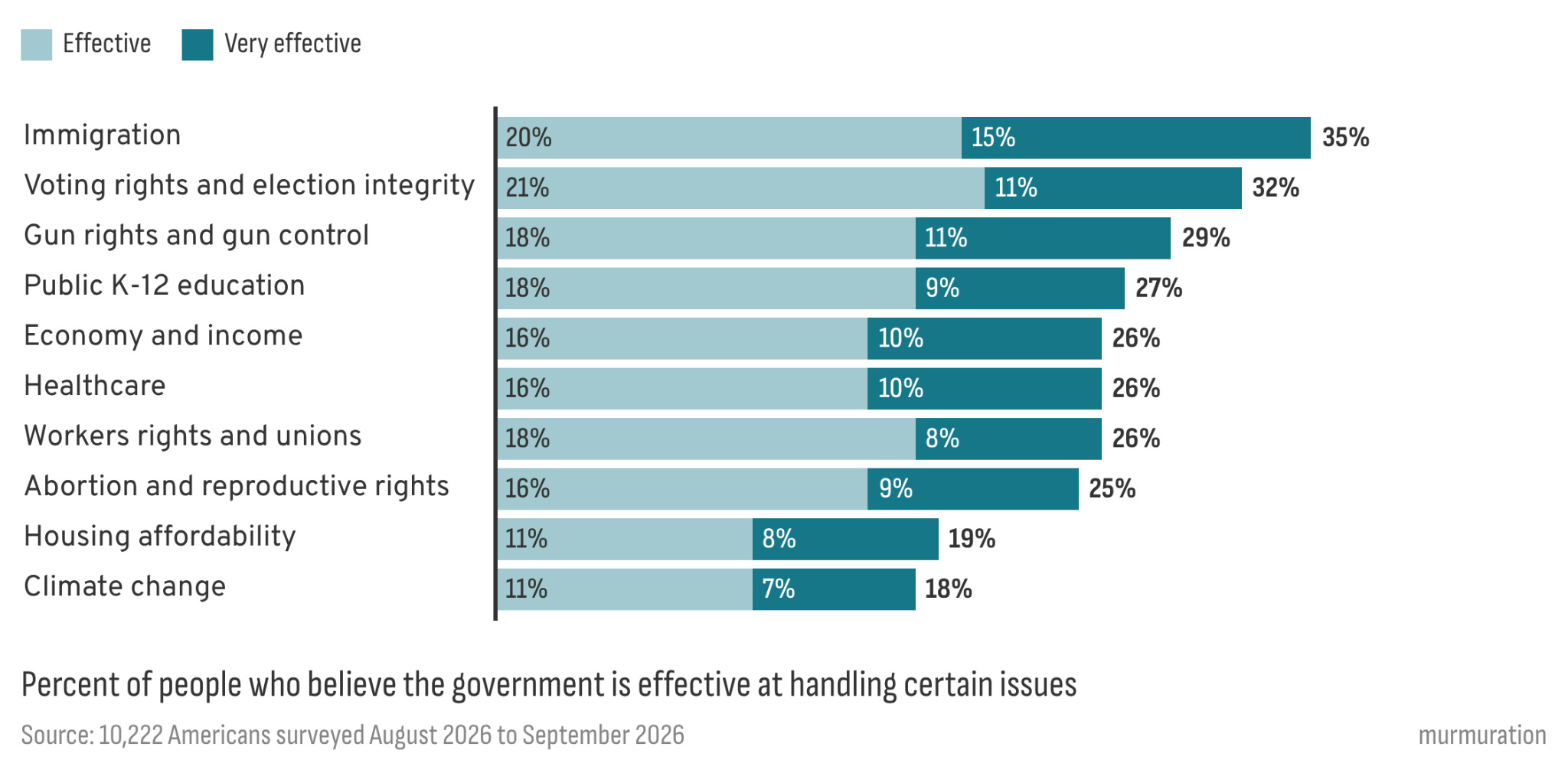
What Americans want: When asked what matters most in determining whether the government is working well, Americans pointed to responsiveness to the public (24%), accountability (20%), adherence to rules (18%), and transparency (17%). But they also want results. When asked about their biggest frustration with the federal government, 29% pointed to gridlock and 25% to politicians promising change without delivering. And when asked what the government could do to improve their lives over the next two years, 27% spontaneously identified government accountability.
What this means: The election created an opportunity for new leaders to demonstrate what the government can accomplish. But rebuilding confidence will require more than promises or changes in political leadership. People need to see institutions respond to their concerns, follow through on commitments, and make improvements they can recognize in their everyday lives. For elected leaders and institutions alike, the challenge is not just to deliver progress, but to make that progress visible and meaningful to the people they serve.
Final Thoughts
A week after Election Day, the significance of what Americans accomplished at the ballot box remains clear. Across the country, voters made consequential choices about who would represent them and the direction they want their communities and country to take. The results remind us that change is possible, sometimes on a remarkable scale.
But elections are also beginnings. The people who won now have an opportunity, and a responsibility, to turn the trust placed in them into meaningful progress.
What we’ve heard from Americans over the past year helps illuminate what that progress might look like. People want greater financial security, stronger communities, more influence over the decisions that affect them, and institutions that listen and deliver. They want to feel that their participation matters, not just on Election Day, but in the decisions and experiences that shape their everyday lives.
The questions worth carrying forward are not simply what last week’s results mean for politics, but what they could mean for people:
How can we build on this moment of civic participation to create more opportunities for people to shape their communities?
How can elected leaders translate the desire for change into improvements people can see and experience?
And how can we ensure that the power people exercised last Tuesday continues to matter between elections?
Last week’s election showed us what democracy can accomplish at the ballot box. What happens next will help determine what it accomplishes in people’s lives.
Let’s make all the days count.
Murmuration is a non-profit that organizes a network of partners and equips them with the insights, tools, and services needed to help communities build and activate the power to transform America into a nation where everyone thrives.